
Your monitoring dashboard says everything is fine. Your panels disagree. Here’s why thermal imaging is the most underused diagnostic tool in commercial solar O&M — and what it finds that nothing else can.
Commercial solar monitoring systems are designed to track overall production, flag inverter faults, and report communication errors. What they are not designed to do is identify module-level failures that silently erode output without triggering a single alert.
Hot spots, micro-cracks, bypass diode failures, and junction box defects are among the most common causes of underperformance in commercial PV systems. They reduce energy yield, accelerate degradation, and in severe cases, create fire hazards. Yet they are virtually invisible to standard monitoring platforms.
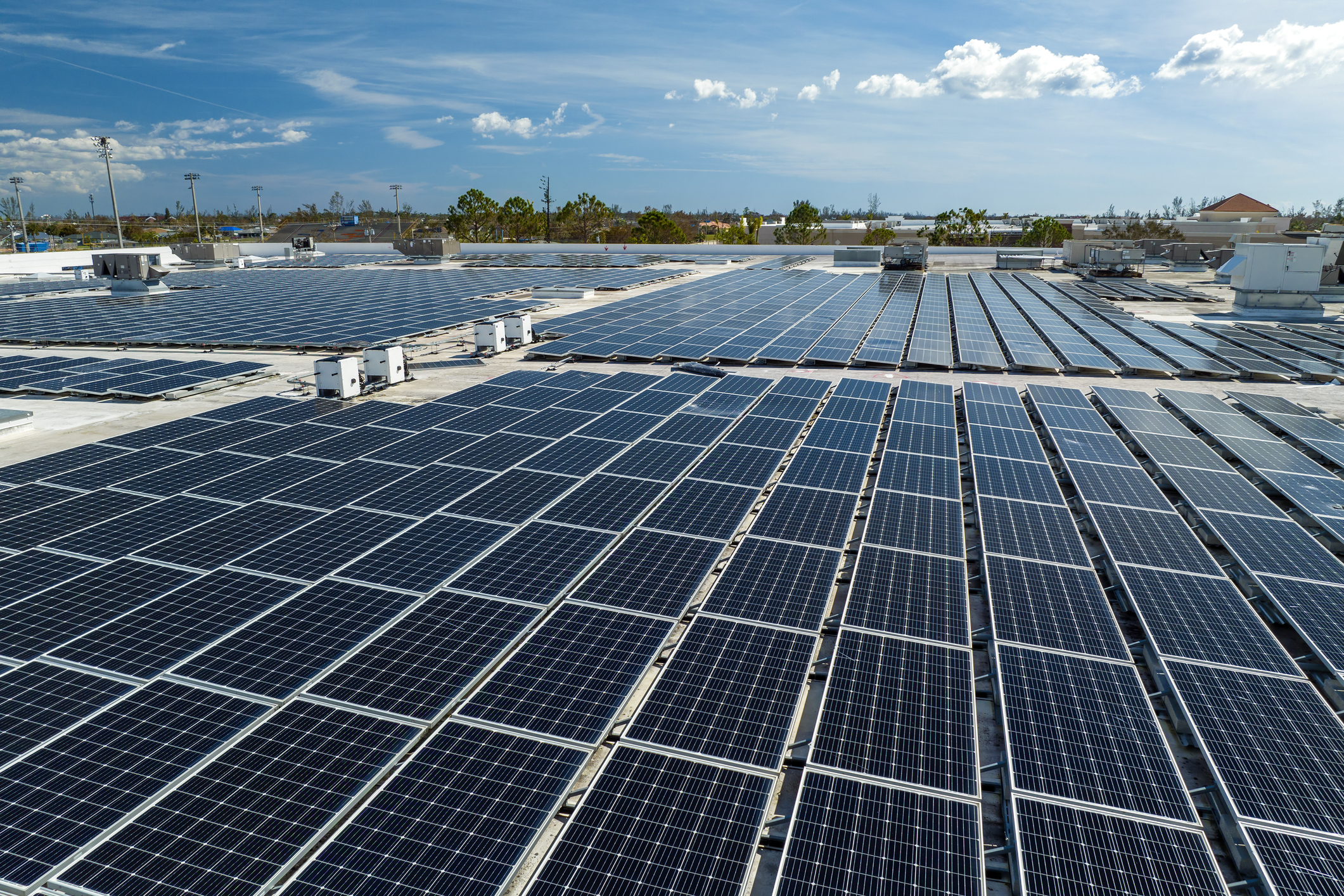
This is where infrared thermography changes the equation. A single thermal inspection can scan an entire commercial rooftop in hours, mapping every anomaly that conventional monitoring will never detect.
What Are Hot Spots and Why Do They Matter?
A hot spot occurs when a localized area of a solar cell operates at a significantly higher temperature than the surrounding cells. This temperature differential is caused by internal resistance — typically the result of cell cracks, poor solder joints, shading-induced mismatch, or manufacturing defects.
When a cell is partially shaded or damaged, it stops generating current and instead becomes a resistive load. The current from the healthy cells is forced through the defective cell, converting electrical energy into heat. This localized heating is the hot spot.
According to research published by the International Energy Agency (IEA) PVPS Task 13, hot spots are present in approximately 5% to 30% of modules in field-aged commercial systems, depending on age, module quality, and environmental exposure. A single hot spot can reduce the output of an affected module by 10% to 20%, and in severe cases, lead to permanent cell degradation, backsheet burn-through, or module failure.
How Thermal Inspection Works for Commercial Solar Systems
Infrared thermography uses a thermal imaging camera — either handheld or drone-mounted — to capture the heat signature of each module in a PV array. Because defective cells generate excess heat, they appear as visible anomalies in the thermal image, clearly distinguishable from healthy cells.
A professional thermal inspection of a commercial PV system typically involves:
- Pre-inspection system review: confirming array layout, inverter mapping, and historical performance data
- Optimal timing: inspections are conducted during peak irradiance (typically between 10:00 and 14:00) with minimum 500 W/m² irradiance and low wind speed for accurate readings
- Thermal scan: systematic imaging of every module, string by string, using calibrated IR cameras with at least 320×240 resolution
- Anomaly classification: each thermal anomaly is categorized by type (hot spot, bypass diode failure, string fault, connection defect) and severity (minor, moderate, critical)
- Diagnostic report: a complete map of all anomalies with recommended corrective actions, prioritized by financial impact and safety risk
For large commercial arrays, drone-based thermography has become the industry standard. Drones equipped with radiometric thermal cameras can scan 1 MW of rooftop capacity in under 30 minutes, delivering high-resolution data without the need for roof access or scaffolding.
What Standard Monitoring Misses — and What It Costs You
Most commercial solar monitoring systems operate at the inverter or string level. They can tell you if an entire string has failed or if an inverter has tripped. What they cannot do is identify partial module failures, gradual cell degradation, or thermal anomalies within individual modules.
This creates a blind spot. A module with a significant hot spot may still produce enough current to avoid triggering an alert, while silently losing 10–20% of its rated output. Across a 500 kW commercial system with hundreds of modules, even a 5% incidence rate of hot spots can translate to thousands of dollars in undetected annual losses.
A study by Sandia National Laboratories found that module-level faults account for approximately 40% of all energy losses in commercial PV systems, yet they are the least likely to be detected by conventional monitoring. Thermal inspection is the primary diagnostic method for identifying these faults.
Hot Spots Are Not Just a Performance Problem — They Are a Safety Risk
Beyond energy losses, severe hot spots pose a real fire risk. When localized temperatures exceed the tolerance of the module’s encapsulant and backsheet materials, thermal runaway can occur. This has been documented in multiple industry reports, including investigations by the German TUV Rheinland and Fraunhofer ISE.
For commercial buildings — particularly warehouses, retail spaces, and manufacturing facilities — a rooftop fire caused by a solar module is not just an equipment loss. It is a business continuity event with insurance, liability, and operational consequences that far exceed the cost of a preventive inspection.
Many insurance providers and building codes are now beginning to require periodic thermal inspections as a condition of coverage or compliance for commercial PV installations. This trend is accelerating in the United States, Europe, and Australia.
How Often Should Commercial Solar Systems Be Thermally Inspected?
Industry best practices recommend a comprehensive thermal inspection at least once per year for commercial PV systems. However, the optimal frequency depends on several factors:
- System age: older systems (5+ years) develop more faults and benefit from biannual inspections
- Environmental exposure: systems in regions with high thermal cycling, hail risk, or heavy soiling may require more frequent scans
- Warranty claims: thermal evidence is often required to support manufacturer warranty claims for defective modules
- Post-event inspections: after severe weather (hail, storms, extreme heat events), an immediate thermal scan is recommended to assess damage
For systems under a recurring O&M contract, thermal inspection is typically included as a standard service — one of the clearest advantages of structured maintenance over a reactive approach.
Frequently Asked Questions
What are hot spots in solar panels?
Hot spots are localized areas of excessive heat within a solar module, caused by cell defects, micro-cracks, shading mismatch, or poor solder connections. The damaged cell stops generating power and instead becomes a resistive load, converting current from healthy cells into heat. Hot spots can reduce module output by 10–20% and, if left unaddressed, cause permanent damage or fire risk.
How does thermal inspection work for solar systems?
Thermal inspection uses infrared cameras to capture heat signatures across a PV array. Defective cells generate excess heat visible in the thermal image. Inspections are performed during peak sun hours (minimum 500 W/m² irradiance) using handheld or drone-mounted IR cameras. Each anomaly is classified by type and severity, and a prioritized corrective action report is delivered.
How often should commercial solar panels be thermally inspected?
At minimum, once per year. Systems older than five years, or those exposed to harsh environmental conditions (hail, extreme heat, heavy soiling), benefit from biannual inspections. A thermal scan is also recommended immediately after severe weather events. Under a structured O&M contract, thermal inspection is typically included as a standard service.
Can hot spots damage solar panels permanently?
Yes. Persistent hot spots cause progressive degradation of the affected cells, encapsulant browning, backsheet delamination, and in extreme cases, burn-through. Severe hot spots have been linked to rooftop fires in commercial installations. Early detection through thermal imaging allows intervention before irreversible damage occurs.
What equipment is used for solar thermal inspections?
Professional solar thermal inspections use radiometric infrared cameras with a minimum resolution of 320×240 pixels. For large commercial arrays, drone-mounted thermal cameras are standard, allowing a 1 MW rooftop to be scanned in under 30 minutes. Common equipment includes FLIR, DJI Zenmuse XT2/H20T, and Autel EVO II Dual cameras. All equipment must be calibrated and operated by certified thermographers for accurate results.